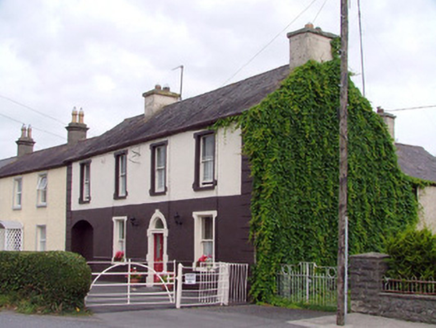
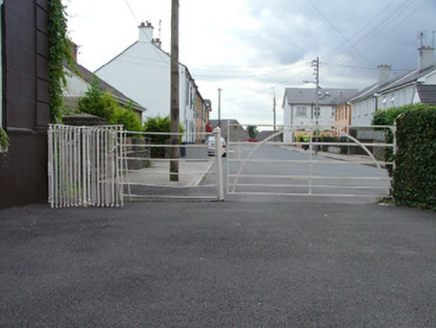
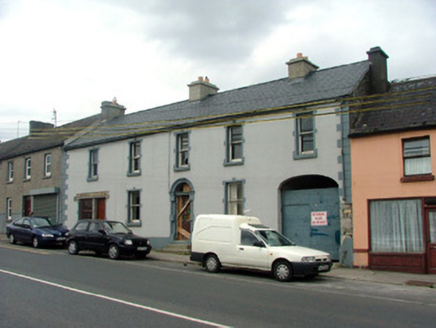
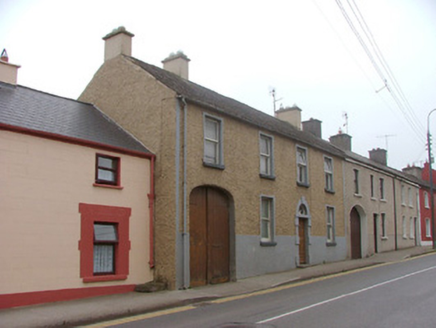
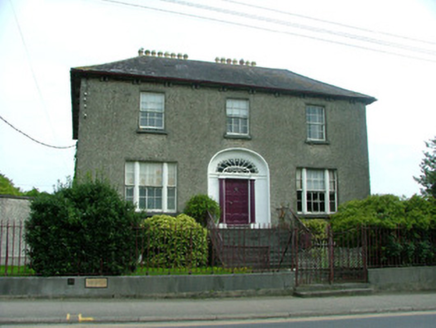
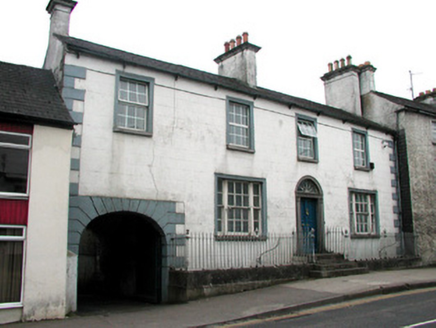
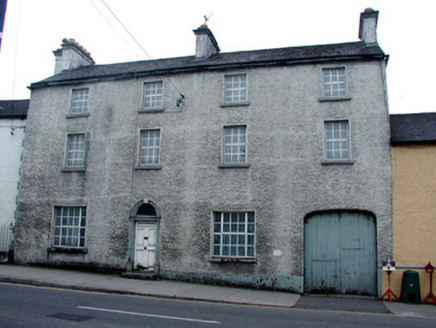
End-of-terrace four-bay two-storey house, built c.1870, with integral carriage arch and rear return and extensions. Set within enclave. Pitched slate roof with terracotta ridge tiles and rendered ch...
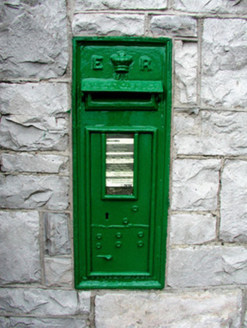
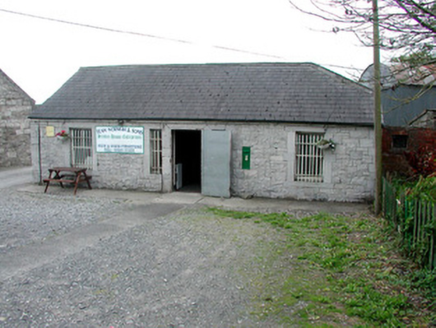
Cast-iron post box, erected c.1905, with ER VII royal cipher and crown. Mounted in stone wall of former ticket office of Edenderry Railway Station. Maker’s mark ‘W.T. Allen & Co. London’ to ba...
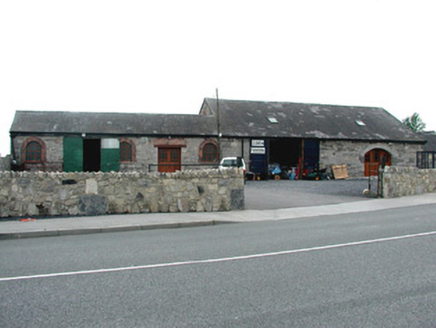
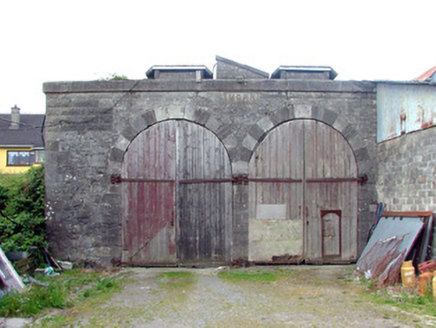
Detached two-bay single-storey former goods shed, built in 1877 by the Midland Great Western Railway, with receding five-bays to north. Now in commercial use. Formerly attached to the ticket office ...
Detached three-bay single storey former ticket office, built in 1877 by the Midland Great Western Railway, with extension to south at rear. Now in use as a furniture shop. Formerly adjoined goods sh...
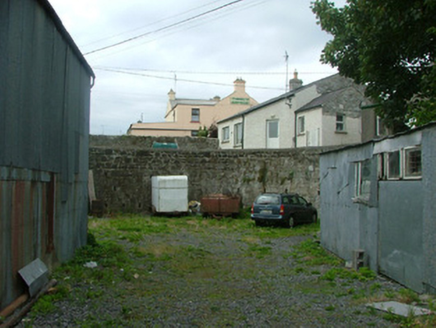
Detached two-bay single-storey former engine shed, built 1920, by the Midland Great Western Railway. Now used for storage. Set within its own enclosed yard. Flat roof with protruding cut stone air ...
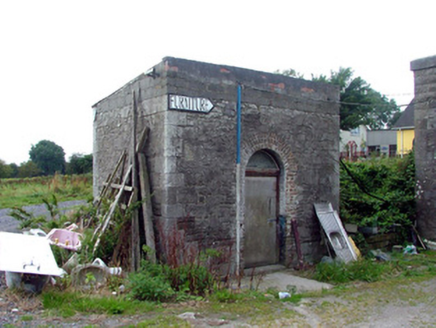
Detached single-bay single-storey former pump shed, built in 1877, by the Midland Great Western Railway, with extension to rear. Now used for storage. Former flat roof replaced by single-pitched cor...
Former turntable, built in 1877 by the Midland Great Western Railway at Edenderry Station. Now disused. Comprising semi-circular random coursed limestone wall. Joist holes dispersed throughout wall...
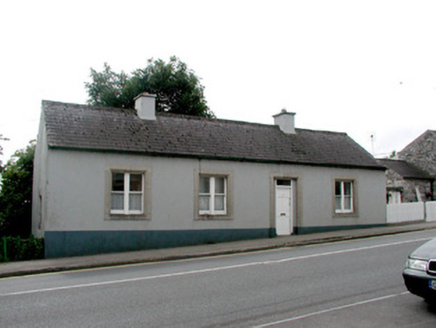
Detached four-bay single-storey former railway worker's house, built c.1900, with extension to south. Now a private house. Fronts onto street. Pitched slate roof with rendered chimneystacks, terrac...
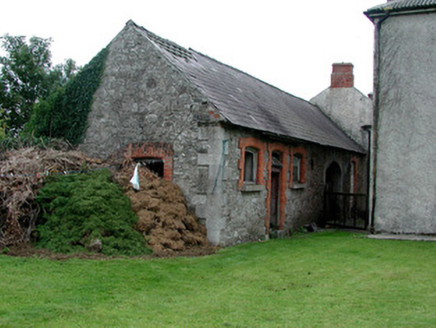
Detached three-bay single-storey outbuilding, built in 1877, abutting house within grounds of Quaker Meeting House. Pitched slate roof with some cast-iron rainwater goods. Random coursed stone walls...
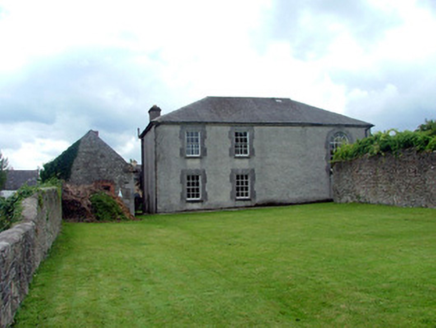
Detached four-bay two-storey Quaker meeting house, rebuilt in 1806. Built on the site of the eighteenth-century meeting house built in 1707. Located within its own grounds. Hipped corrugated-iron r...
Detached three-bay two-storey over raised basement house, built 1813 to a design by James Brownrigg, with flanking quadrant walls framing front site. Set back from the street. Hipped slate roof with...
Terraced four-bay two-storey over basement house, built c.1800, with extension and return to rear. Fronts directly onto street. Pitched slate roof with rendered chimneystacks, terracotta ridge tiles...
Terraced four-bay three-storey house, built c.1760, with integral carriage arch and return and extension to rear. Fronts directly onto street. Pitched tiled roof with rendered chimneystacks and cast...
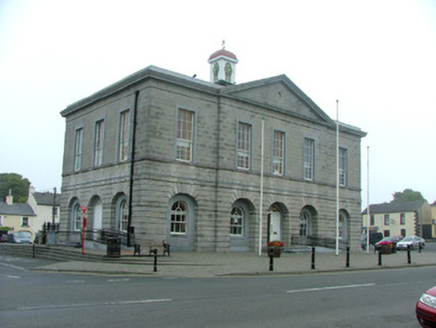
Detached T-plan five-bay two-storey former market house, built in 1826 by Lord Downshire to a design by Thomas Duff, with three-bay pedimented breakfronts to front and rear. Formerly used as a ballro...
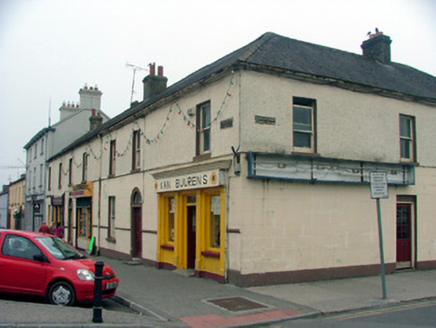
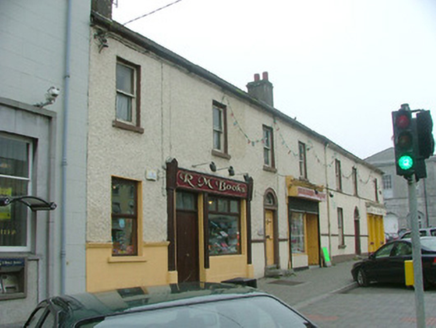
Terraced four-bay two-storey house, built c.1780, now in commercial use with shopfronts to ground floor. Fronts directly onto street. Pitched slate roof with terracotta ridge tiles and rendered chim...
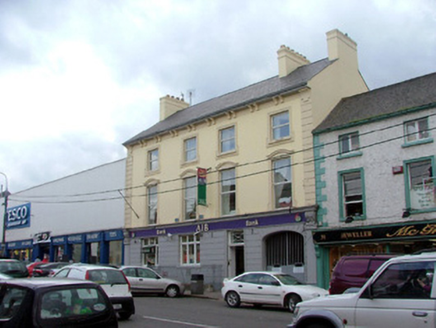
Terraced four-bay three-storey former house, built c.1880, with integral carriage arch. Now in use as a bank. Fronts directly onto street. Pitched slate roof with rendered chimneystacks and corbell...
To provide the best experiences, we use technologies like cookies to store and/or access device information. Consenting to these technologies will allow us to process data such as browsing behavior or unique IDs on this site. Not consenting or withdrawing consent, may adversely affect certain features and functions.
Functional
Always active
The technical storage or access is strictly necessary for the legitimate purpose of enabling the use of a specific service explicitly requested by the subscriber or user, or for the sole purpose of carrying out the transmission of a communication over an electronic communications network.
Preferences
The technical storage or access is necessary for the legitimate purpose of storing preferences that are not requested by the subscriber or user.
Statistics
The technical storage or access that is used exclusively for statistical purposes.The technical storage or access that is used exclusively for anonymous statistical purposes. Without a subpoena, voluntary compliance on the part of your Internet Service Provider, or additional records from a third party, information stored or retrieved for this purpose alone cannot usually be used to identify you.
Marketing
The technical storage or access is required to create user profiles to send advertising, or to track the user on a website or across several websites for similar marketing purposes.